Showing posts with label exercise. Show all posts

Tuesday, March 22, 2011

Home Food

"Most lawns are purely cosmetic in function. Thus, affluent societies have, all unnoticed, developed an agriculture which produces a polluted waste product, in the presence of famine and erosion elsewhere, and the threat of water shortages at home"-Bill Mollison
Pretty handy book if your in to gardening or self sustainablility...


My current night stand read is Introduction to Permaculture by Bill Mollison. Mollison is credited as being the founder of Permaculture, which essentially focuses on establishing sustainable cultures through sustainable food production, urban design,even efficient use of city refuse (humanure) and so forth. I first heard about Mollison while reading some of Joel Salatin's work. The past couple of years I have been reading gardening books and putting my skills to the test, but permaculture is the equivalent to putting your garden on steroids.* The point of this post is that it is spring time and therefore time to start getting seeds ready or at least planning your garden. Even a couple of symbolic tomato plants on the patio hepls. Here is a photo of some plant's from my garden last year.

The Brassica gang holding down fort.


In any case, I would reccomend the book and the practices it espouses to just about anyone. Whether you are interested in good health or the environment, self subsistence, or even saving a buck; growing your own food is a good idea. Personally, I do it for all of the above. Growing your own food is great supplemental exercise for the fitness enthusiast and probably adequate for the lay person if they take an old school approach and minimize the use power tools. On top of that, you can't beat fresh food. No matter what "diet" one follows, low carb, paleo, vegan/vegetarien, etc. All of these diets tend to include some plant matter unles your trying to get your Vilhjalmur Stefansson on (see bio). 
This is proof that mowing the lawn is much less cool in contrast to gardening.


Current events taking place in the world further validate the need for at least the supplemental production of local food. Not to start any debates on the merits of the globalized food production system, but the current situations in Japan and the middle east  illustrate this point quite well. For example, imagine if nuclear fallout indeed did make its way over to California soil. California is the number one food producing state in our country (1). According to a California tourist site, which I will be the first to admit may not be the most credible source, California produces over half the nations fruit, vegetable, and nut products, along with being a major dairy producer (2). Personally I know a majority of the produce I have eaten since late December has come via California.
Our food is often times more traveled than we are.

Certain foods are also highly specialized in only one or two parts of the country leaving the entire crop production highly vulnerable to disease or natural disaster. For example a majority of the worlds corn is grown in the midwest and Brazil. An article released from University of California-Davis also reports that 60 perccent of the nations apples come from Washington state alone (3). With that in mind, I understand that we can't live in fear of hypothetical situations, but it is probably prudent for the country not to put all of its eggs (and other foods) in one basket. A little bit of effort by surburanites and even city dwellers could really help to fortify our food base as well as increase the general nutrition of the food we eat.**

Think about how much food could be produced in suburban yards as well as the gas from lawn mowers that could saved or reallocated, and nitrogen run off from all the turf builder/fertilizer applied. We would also drastically cut down on food mileage. According to a report form the Leopold Center for Sustainable Agriculture at Iowa State University, its takes about 250 Calories to produce a typical pound of pears or apples once all fuel input is taken into account (4). According to nutritiondata.com, a pound of apple only provided about 250 Calories itself (see here). In my current city, Chicago, it takes an average of 1518 miles traveled to put produce on the table (4). In Michael Pollan's The Omnivores Dilemma, it is written that it takes roughly 10 Calories to produce every 1 Calorie provided in typical California grown lettuce.


I am trying to further develop my food production adroitness this year by starting all my plants from seed, but it really can be as simple as buying a few plants from Lowes or Home Depot and plopping them in the ground, followed by an occasional watering and weeding. It really comes back to the situation being a win-win. We can have people reconnected with their food, use millions of acres of "lawn" to grow food rather than practice indentured servitude to grass. There are obviously  flaws in the current system of food production, and getting out and growing a little of your own certainly wouldn't hurt.

Mixing up some of my seed starting mix...home made compost, potting soil & vermiculture

 * Just to be clear in "gardening on steroids" comment I mean Permaculture is a step up in terms of sustainability and production. I am not referring to use of synthetic fertilizers or using pesticides.

**Analytical studies show that certain processing techniques and the travel/aging of foods can cause nutrient loss in the form of vitamin and phytochemical loss (5, 6).

Monday, March 7, 2011

Fasted Cardio part 1

Update: Due to time constraints and the finding of new material to review this will be a 2 parter

Finally spring appears to be right around the corner. With the emergence of the the sun occuring before noon (ok 7 am), a recent bodybuilding event, and a few recent articles I've come across I wanted to a post on morning exercise, or fasted exercise in general. Personally when the sun is up and it's not freezing outside, I find that I am more inclined to want to get in some morning exercise as opposed to when its dark and cold in the morning. So that is what piqued my interest to look into the science behind fasted cardio this year, along with the bodybuilding event I mentioned.
 This past weekend, the Arnold Classic took place. The show is essentially the 2nd biggest show in pro bodybuilding, next to the Mr. Olympia. I read some of the contestants columns in Muscular Development magazine, and you can be sure each of them used some form of fasted cardio to get leaner for the show. In fact alot of serious fitness enthusiasts incorporate fasted conditioning into their exercise regimens in an effort to "maximize fat loss" since they are exercisng on an empty stomach. I realize several will argue that one shouldn't base decisions off of anecdotes for several reasons including confounders, personal bias, subjective outcomce meausures, chance outcomes, etc. Nonetheless,  I still believe in anecdotes, but I decided to look into a bit more more. By chance, the first "scientific" article I came across was from the most recent Strength and Conditioning Journal which was waiting for me back at my mom's house this weekend. Anyways I was none too impressed with the article. Here's why...

First off the author Brad Schoenfield, acknowledges the popularity and rationale behind fasted cardio, but concludes science does not back its efficacly. Here I will have to disagree. He goes on to write that, "First and foremost, it is shortsighted to look solely at how much fat is burned during an exercise session. The human body is very dynamic and continually adjusts its use of fat for fuel. Substrate utilization is governed by a host of factors (i.e., hormonal secretions, enzyme activity, transcription factors, etc), and these factors can change by the moment ." when considering the rationale behind one burning more fat during fasted cardio than blood glucose. However this statement in contradictory.

Despite acknowledging substrate utilization (fat or carbohytdrate) is affected by hormone secretion and gene expression, the article does not take this into account throughout its entirity, later writing, " fat burning must be considered over the course of days-not on an hour-to-hour basis-to get a meaningful perspective on its impact on body composition".  I am under the impression, Schoenfield assumes that exercising with food in the stomach will allow one to exercise longer or harder and thus burn more calories. One of the references Schoenfield uses is a classic cycling study out of Time Noakes lab showing that a preexercise meal enhances time to exhaustion in a bout of cycling compared to a fasted state (1). The key finding of this study was subjects that consumed breakfast rode for  136 minutes (+/-14 min) compared with 109 minutes (+/-12 min) when they cycled in the fasted state (109+/-12 min). These findings are not at all relevant to the average person looking to shed some fat.While going harder or longer is ideal for athletes, the general population is looking for fat loss and riding a bike to exhaustion for 2.5 hours is not quite neccessary for fat loss.  Calories burned is not as important as the hormonal response and subsequent gene expression. I have explained this before when discussing how intervals are superior to steady state cardio for fatloss despite burning far fewer calories in a session (see here).

Interval training increases stress hormones such as epinephrine, norepinephrine, and growth hormone(2, 3). Increasing these hormones during the exercise bouts chronically increases enzymes that are key to fat metabolism such as Citrate Synthase (4) and fat transporting proteins such as FAT/CD36 (5) . So without sounding all fanatic, like many fitness websites out there, interval training essentially increases the bodie's ability to burn fat, whether during exercise or at rest.

Now here is where things get real interesting in the Schoenfield article, the author acknowleges, " multiple studies show that consumption of carbohydrate before low-intensity aerobic exercise in untrained subjects reduces the entry of long-chain fatty acids in the mitochondria, thereby blunting fat oxidation. This is attributed to an insulin-mediated attenuation of adipose tissue lipolysis... and a decreased expression of genes involved in fatty acid transport and oxidation"  Basically this equates to eat he recognizes eating before exercise causes an increase in insulin, and insulin stops the breakdown of fat (adipose tissue lipolysis) and decreases the actions of genes that express for enzymes important in fat metabolism. One of the referenced studies is a study infact showing that eating before exercise decreases fat burning or lipolysis (6) but then the author states,  "both training status and aerobic exercise intensity have been shown to mitigate the effects of a pre-exercise meal on fat oxidation." That is not neccessarily the case. Its true that intense exercise will lower insulin levels and increase the bodies ability to "burn" fat, but for the average person who has an active life or other fitness goals such as body building, power lifting, etc. or maybe even an athlete just trying to supplement their current training, high intensity work is not always practicial. Moderate intensity does not suppress inuslin or increase the stress hormone response to exercise to the same extent as high intensity exercise. This can be read in any exercise physiology text. The following figure will show whats going on.

(BTW this is figure 5.10 from Physiology of Sport & Exercise by Jack Wilmore, Dave Costill, and W. Larry Kenney)


Basically exercise increases  glucose rate of appearance from the liver to be used as fuel. There is a subsequent decrease in insulin caused by the stress hormones I mentioned earlier in the post. One might ask how we can use that extra glucose if we have a decrease in insulin? During exercise we experience a shift in a protein that allows glucose into the cell, called GLUT4, to the cell membrane (7). This allows for the decrease in insulin while still allowing our cells to handle more glucose than would be encountered at rest. In fat as one adopts an exercise plan, they increase GLUT4 content, and the ability to translocate these proteins to the cell membrane. This is one of the key mechanisms that results in the exercising population being more insulin "sensitive" (8). Unfortunately once you stop exercising this increase in insulin sensitivity can diminish in as little as a week according to some studies. I am not so sure about this personally, but let me stop going off on a tangent.

Here is a visual of the GLUT4 transporter at the cell membrane to get a better picture of what is going on...

With more GLUT4 translocation occuring without it, less insulin is needed resulting in increased insulin sensitivity.


So hopefully what you have been able to gather is that a bout of exercise is about much more than burning calories. Particularly you are looking for a hormonal and general physiological response that will improve the bodie's ability to burn fat fat in the long run. This includes increasing enzymes and different proteins that help facilitate this process as well as decreasing circulating insulin. Fasted cardio seems to be advantageous in this department. First off after an overnight fast, you start off with lower insulin. Subsequently, the stress hormone associated with exercise drive it down further than would be experienced after a meal (breakfast) thus inhibiting insulin's fat storing effects and enhancing the lipotytic effects of the stress hormones. In regards to the GLUT4 adaptation and resting insulin levels, I am not sure at this point in time. In part 2 of this post, I plan to follow up on this by reviewing a couple of randomized experimental trials that indeed show fasting cardio is superior over the long term to exercising at the same intensity while fed.

I also just want to mention that I have no bones with Brad Schoenfield. I have read alot of his previous material and he seems like an intelligent guy. I know he has helped alot of people reach their fitness goals. However, I feel in his most recent article discussing fasted exercise, he over contextualized. It's true some people need a little food in their belly before an intense bout of exercise whether it be conditioning, sports, or weight training. With that said, there is nothing wrong with those looking to lose fat exercisng in the fasted state to facilitae metabolic adaptations that will encourage their body to metabolize fat.


Monday, January 31, 2011

Paired Set Workouts to Enhance Your Exercise Efficiency.


       One of the main reasons people give for their discretion of not working out is lack of time. Moreover, there are many people already exercising who wish they could get more out of their time in the gym, or perhaps get in and out of the gym a little quicker. Well for these crowds, the answer may be paired set training or complexes. Traditional sets are defined as performing a given amount of repetitions followed by a given rest period and repeating. Paired sets involve performing one set of an exercise followed immediately by another. 
Following the following methods will help you get in and out of the gym much quicker


There are several ways to go about doing this, so let me fill you in on the technical jargon:

Super set: This is when you perform a set of an exercise (exercise A) and follow it up with performing an exercise (exercise B) that taxes the antagonist muscle group to exercise A. An example would be performing a set of pull ups immediately followed up by a set of dumbbell shoulder presses.

Compound set: This type of paired set is more often practiced by the bodybuilding crowd. Compound sets involve performing two or more consecutive exercises with no rest in between them as well. However this time around, all of the exercises are targeting the same musculature. Most often a compound movement (one involving multiple joints) will be followed by an accessory movement (one that only involves one joint) For example a trainee may perform a set of the bench press followed up immediately by a set of chest  flyes. After the rest period that has been established for this workout (let’s say 1 min.), this set will be repeated, most likely for a total of 3-4 sets when it’s all said and done. Personally I am against frequent use of compound sets.  Let me further elaborate on this.

Compound sets are very similar to another technique often used by bodybuilders, known as pre fatiguing. Pre-fatiguing involves performing a few sets of an accessory movement (lets use the chest fly again) followed by a compound movement (lets use the bench press again). The theory behind this practice is that the accessory exercise will tire the main muscles being targeted (in this case the pectoralis major) before the compound movement resulting in the muscles being taxed to greater extent during the compound movement (1). The problem is that this could not be further from the truth. What the science actually shows is that pre-fatiguing does indeed elicit fatigue in the targeted musculature, rendering them less active during the more stressful compound movements (2,3). Therefore this strategy alters the muscular recruitment pattern during the main movement placing more stress on complementary muscles and leaving the trainee more vulnerable to injury. Therefore it is my feeling that performing the additional accessory movement following each set of the compound movement renders the trainee at greater risk for injury due to poor recruitment and deleterious mechanics (2,3).

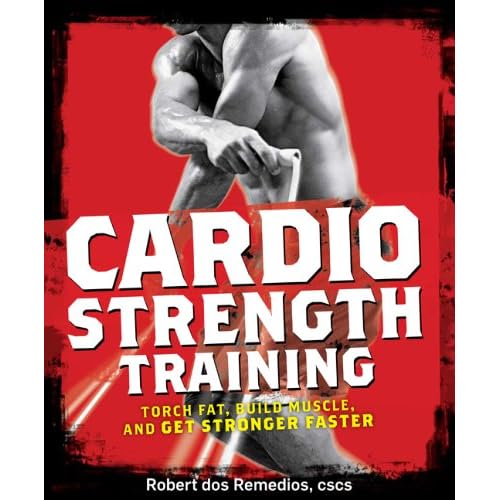
Complexes: Complexes involve grouping several compound exercises together in consecutive order and then taking short rests between performing this routine again. To do this form of training justice, I will write another separate post on the topic. Another great source on complexes is Cardio Strength Training by coach Robert Dos Remedios (4)


Now on to the research findings on paired set training. This type of training has been utilized by a lot of fitness enthusiasts for years, but Daniel Robbins and colleagues the University of Ballat in Australia kept busy this past year putting out research that shows that paired set training is effective at increasing the efficiency of workouts. In one of the trials(5), Robbins collected EMG data (a test measuring muscle activity) for the primary muscles during bench pulls and bench press (pectoralis major, anterior deltoid, latissimus dorsi, and trapezius) The subjects performed the exercises using the traditional method in session and using paired sets in another session. The findings revealed that despite performing the same amount of work, the paired set session took roughly half as long, the trainees were able to maintain the same volume load  (use just as much weight) throughout the session, and that there were no significant differences in EMG data, inferring that neuromuscular fatigue was no greater in the paired set group. Other trials by the same research team found similar findings in that the paired set sessions drastically reduced time while allowing the trainee to maintain similar power, intensity, and total volume load when using paired sets.(6,7) These findings are especially meaningful to populations that must emphasize power movements and high intensity lifting in limited time frames, such as athletes.
Troy Polamalu emphasizing complexes in his training. Its only gotten him to 3 super bowls and counting.

As for energy expenditure, studies have found that paired sets elicit greater energy expenditure during the workout session, which makes sense considering the trainee is performing more mechanical work by performing 2 exercises rather than 1 in the same time frame (8). Kelleher et al put a group of young men through a full 6 exercise, 4 sets each workout and found paired set training elicited an energy expenditure of 8.3 Calories per minute compared to only 6.3 Calories per minute for traditional sets. Now as you may note these Caloric expenditures are not that high but the great thing about weight training is (EPOC) excessive post oxygen consumption. EPOC refers to the body continuing to use above-resting oxygen while recovery begins to occur. As a generality, the more oxygen we are utilizing, the greater our caloric expenditure. The EPOC for the paired sets were significantly higher (18.9 Calories vs. 13.5) one hour after completion of the workout session. Another marker of raised metabolism, blood lactate was also significantly higher as well

Anecdotal observations and the scientific data reveal that paired set training is an effective way to get more volume in a workout session of equal time or get in a workout of the same volume in less time, while maintaining crucial aspects that elicit adaptations to occur, such as power and intensity. With that said it appears paired set training is the way to go for those of us in a crunch for time or who want to increase the Caloric requirement of our resistance training sessions. To further put all this into context, I will concede there will inevitably be days where the energy levels and motivation just won’t be there to effectively perform paired sets for the entire duration of a session. This style of training is very demanding! For days like these, I will discuss alternative strategies that can be used to enhance the workout without rendering it too demanding in another post.


Happy exercising,
AR
1) Baeche & Earle (Eds) 2008 The Essentials of Strength Training and Conditioning. Human Kinetics Champaign, IL
2) Augustsson J, Thomeé R, Hörnstedt P, et al. 2003 Effect of pre-exhaustion exercise on lower-extremity muscle activation during a leg press exercise. J Strength Cond Res.17(2):411-6.
3) Brennecke A, Guimarães TM, Leone R, et al. 2009 Neuromuscular activity during bench press exercise performed with and without the preexhaustion method. J Strength Cond Res. 23(7):1933-40.

4) Dos Remedios, R. 2009 Cardio Strength Training. Rodale Publishing New York, NY

5) Robbins DW, Young WB, Behm DG, et al. 2010 Physical performance and electromyographic responses to an acute bout of paired set strength training versus traditional strength training. J Strength Cond Res. 24(5):1237-45.
6) Robbins DW, Young WB, Behm DG, Payne WR. 2010 The effect of a complex agonist and antagonist resistance training protocol on volume load, power output, electromyographic responses, and efficiency. J Strength Cond Res. 24(7):1782-9.
7) Robbins DW, Young WB, Behm DG, Payne WR. 2010 Agonist-antagonist paired set resistance training: a brief review. J Strength Cond Res. 24(10):2873-82.
8) Kelleher AR, Hackney KJ, Fairchild TJ et al. 2010 The metabolic costs of reciprocal supersets vs. traditional resistance exercise in young recreationally active adults. J Strength Cond Res. 24(4):1043-51.

Saturday, January 8, 2011

Is body weight training adequate to attain a high level of fitness?

                I’m snowed in today so I decided to skim through some back issues of the NSCA’s Strength and Conditioning Research Journal. I came across an interesting study done by Everett A. Harman and colleagues at the U.S. Army Research Institute (1). The study compared the effects of eight weeks of  a resistance training-based training program  in contrast to the Army Standardized Physical Training program. The Army program is essentially a regimen based off body weight resistance.  My interest was piqued by the fact that the researchers used these protocols to attain the effects they had on combat relevant tests, as well as other more common tests used to asses physical fitness, including the one repletion max (1RM) bench press and squat test and the Treadmill VO2* max test as well. These tests are very relevant to the average person in combat tests are about as “functional” as you can get. Performing this battery of tests at a high level more than ensures that one could perform the pertinent tasks of civilian life with ease. With that said, I thought it would be interesting to see if body weight training alone was enough to attain adequate strength levels.

The researchers found that for, the Army's Standardized Physical Training program and a weight-based training experimental program produce similar, improvements in military physical performance. However, I have to note that these were relatively untrained men and the programs were only followed for 8 weeks. The authors do conclude that further research would be needed to determine whether weight-based training provides an advantage over a longer training period (which I am sure it would). The principle of progressive overload leads me (as well as the authors) to speculate that the weight based program would have won out in the long term. However, the findings of this study do have relevance for the lay man and women when one reads the study closely. Let me elaborate.
               
The subjects included in this study were in relatively decent shape to begin with. In order to simulate a recruit population, only volunteers who were not currently or recently engaged in intense training (a combination of aerobic and weight-based training) were accepted. However individuals engaged in aerobic only, resistance training only, or moderate recreational exercise were allowed. The subject population was decently heterogeneous, with volunteers coming from varied backgrounds. Their physical activity levels ranged from sedentary to fairly active (training 3-4 x week). With that said I am speculating that the training adaptations by these individuals would only be magnified in the general population in the U.S. The last I heard the CDC was reporting only 34.7% of the pop. was exercising and that was an improvement over previous years. (see here)

 The subjects all volunteered for this training which consisted of 5 days of training per week at 1 to 1.5 hours per session. The subjects were in the upper 20’s and average weight of the subjects was 84.5 kg (174lb) for Army Training group and 80.9kg (165lb) for the weight based resistance training group. With that said, one can assume that no couch potatoes would have signed up for this, and if they did, they probably quit (10 of the original 42 subjects dropped out of the study).
If the training got relatively fit subject into shape, imagine the gains that could be made by this guy!

               
Training for the weight based group included 2 days of resistance training coupled with 3.2 km (2 mile) runs, 2 days of athletic enhancement via agility drills or sprint intervals, and 1 day that included an 8 km (roughly 5 miles) hike with a weighted vest or pack up to 33 kg (73lbs) at a pace of a little under 4 mph. The resistance training protocol consisted of 4 complexes* to be repeated 3 times each. The 4 complexes summed to put together a full body workout. There was no waiting time between exercises beyond what it took to walk between stations and set the correct weight. The target pace was 90 seconds per set, including between-exercise time. In other words, the trainees were training circuit style.
               
The subjects performing the Army’s standardized protocol used movements such as the pull up, push up, rear lunges, etc for their resistance training. They also performed aerobic conditioning similar to the weight based training group, doing intervals, moderate distance runs, etc. The exact training can be seen in the IET Standardized Physical Training Guide here or in the full text version of the study.
               
The five combat relevant tests the authors chose were the 3.2 km run/walk with a 32 kg (70 lb) pack, a 400 m run with an 18 kg (40 lb) load, an obstacle course, and an 80 kg (176 lb) casualty recovery drill, and 30 meter rushes (basically a sprint test). As stated earlier, subjects also performed pre and post testing of the VO2 max and 1RM max testing of the squat and bench. In all of the tests mentioned, both groups made statistically significant improvements from pre test to post test (p < .05). Interestingly, the relative gains made by the Army’s body weight training group was significantly greater than the group using the weight based program in the obstacle course, the 80 kg (176 lb) casualty recovery drill, and 30 meter rushes.  Now let’s put this in to perspective

The resistance training undertaken was not traditional resistance training. The loads used were not what would be considered heavy due to the fast pace and high total volume (volume was high because the workouts were full body) The authors also had to put together a program that coincided with heavy aerobic training and being that the sessions were full body, volume for individual body parts was inherently low. Again, it should be reiterated that  the subjects were already in decent shape. The average VO2 of the subjects were close to 50 mL·kg-1·min-1   to begin with. This would place them in about the 70th percentile (normative chart here). The degree of improvement one can expect in VO2max generally depends on the pre training level, and fit volunteers generally show relatively small percentage changes. Again these volunteers were relatively fit, so most individuals would see an even larger gain on similar programs.
               
                In conclusion, we have to consider that some of these individuals had already been participating in resistance training, yet the body weight training of the Army's Standardized Physical Training program was still enough of a stimulus to elicit training adaptations in the bench press and the squat, two of the main movements in resistance training. Individuals who find body weight too challenging could begin by using hold and negatives or partner assisted concentric and work their way up. The findings of these study reveal that while body weight training may not turn an individual into the next Mr. or Mrs. Universe, it will reap the awards of increased muscular strength and endurance (sit up and push up testing was also performed). Further research should be conducted using body weight training in conjunction with some conditioning to monitor the changes that could be witnessed in the lay man or lay woman or diseased population, which are unfortunately becoming more and more “normal”. One of the major reasons public health officials list for the obesity problem in our country is lack of equipment/resources due to poverty. Simple body weight programs seem to be enough of a stimulus to get people into “fighting” shape.


Harman, E Gutekunst, D Frykman, P Nindl, B Alemany, J Mello, R & Sharp, M. (2008) Effects of two different eight-week training programs on militaryPhysical Performance. Journal of Strength and Conditioning Research. 22(2):524-534

*For everyone unfamiliar, the VO2 max test is just a test that measures the aerobic fitness of an individual by determining the theoretical maximum amount of oxygen they could use in a minute.

*A complex consists of performing a series of 3-5 exercises consecutively before taking a rest period and then repeating this complex for a predetermined number of sets.  The protocol in the study essentially had the participants performing multiple complexes, so the training was probably pretty tough!